We crossed the border into Canada at Eastport,
ID, on May 24th. One week and 1,500 miles later we arrived at Dawson Creek, BC, the START of the Alaska Highway.
 This is a big generic “Watch for Wildlife” sign, all lit up
so you’ll pay attention. This one is in
both English and French. Most of the rest
are simply road signs with a picture of the animal you’re supposed to watch out
for. We saw more signs than critters for
days.
This is a big generic “Watch for Wildlife” sign, all lit up
so you’ll pay attention. This one is in
both English and French. Most of the rest
are simply road signs with a picture of the animal you’re supposed to watch out
for. We saw more signs than critters for
days.
 Speaking of signs, when you see this one, you should slow
way down in case there are frost heaves.
So far the road hasn’t been awful.
There’s been a little road maintenance, and some patches, but rarely has
it been as bad as we were warned it would be.
Speaking of signs, when you see this one, you should slow
way down in case there are frost heaves.
So far the road hasn’t been awful.
There’s been a little road maintenance, and some patches, but rarely has
it been as bad as we were warned it would be.

This is a sign we had a little trouble figuring out. I'm assuming it's "Slippery When Freezing".
Much of the road through BC had a lot of straight
stretches--sometimes with dips and hills.
We drove by rivers and lakes and mountains. The road is straight...except when it's not.
We stayed a couple of nights at Toad River Lodge, with a
campsite right on Reflection Lake. When
we got there, neighbors on both sides told us we had the best site in the
campground. The day before there were moose right out the back window, including
a wobbly-kneed baby. We saw moose, but
they were all across the river, and never saw the baby. There’s
a beaver dam and lodge around the corner from our site—we saw one beaver
swimming. We watched a pair of trumpeter
swans float all over the place.
My favorite day was between Toad River and Watson Lake,
driving through Muncho Lake Provincial Park.
We’d had rain the day before and the skies were gray at first. We stopped at a pullout by an alluvial fan,
where the sand, gravel and boulders fans out as it gets washed down from the mountains above.
Across the road was Centennial Falls. I’ve never seen a waterfall with as many
levels as this one had!
We saw more animals that day than total since we’d
been in Canada! First there was a
caribou, then a moose I didn't get a picture of. Then we saw a caribou cow with a couple of mostly grown
calves, just sauntering down the road. This one’s all legs.
Then suddenly we saw Stone sheep crossing the road. Apparently the three rams lead the way. All those horns are impressive.
The rest of the little herd followed, then hung around
for awhile.
We have no idea what they’re licking off the road, but most of them at least gave it a taste.
Continuing on, it's beautiful country.
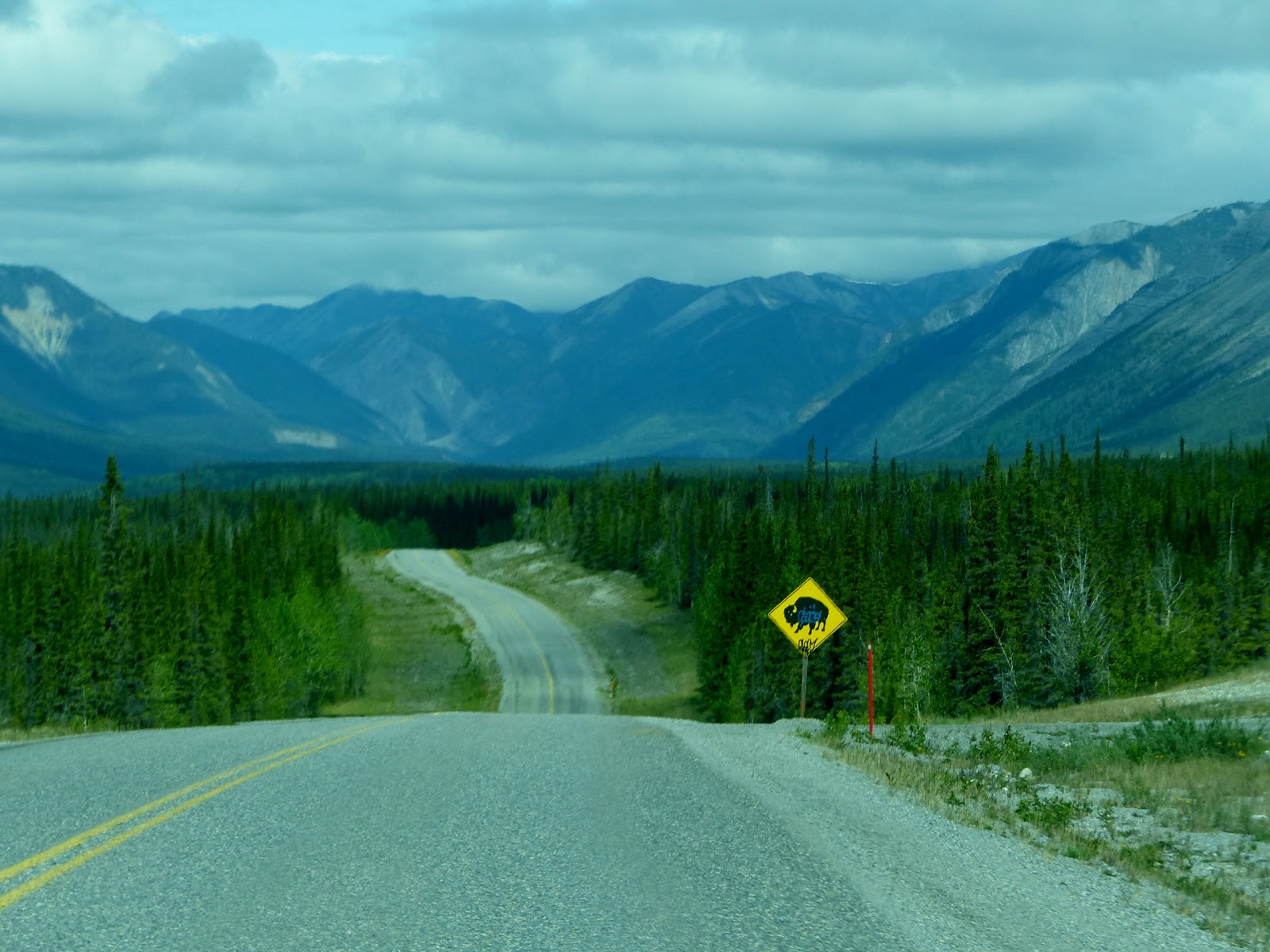
We saw a group of wood bison along the side of the road,
including quite a few calves.
In 1942 a lonesome soldier working on the highway put up a sign with
the distance to his home in Ohio from Watson Lake. Since then people from all over the world have brought signs to add to the Sign
Post Forest. Last count (2016) was over
83,000! George brought one with our
names on it to add to the poles.
(We also visited the Northern Lights Centre in Watson
Lake. It’s a planetarium where we saw a
couple of videos, one about solar storms and the other about the Northern Lights). Sorry--I have no pictures because it's really hard to take them in the dark.)
Just outside Watson Lake is a little church called Our
Lady of the Yukon Church. It seems to be
abandoned now, but I liked the way it looked with the sun shining on the metal
roof.
More pictures here: Alaska Hwy - Mile 0 to Watson Lake


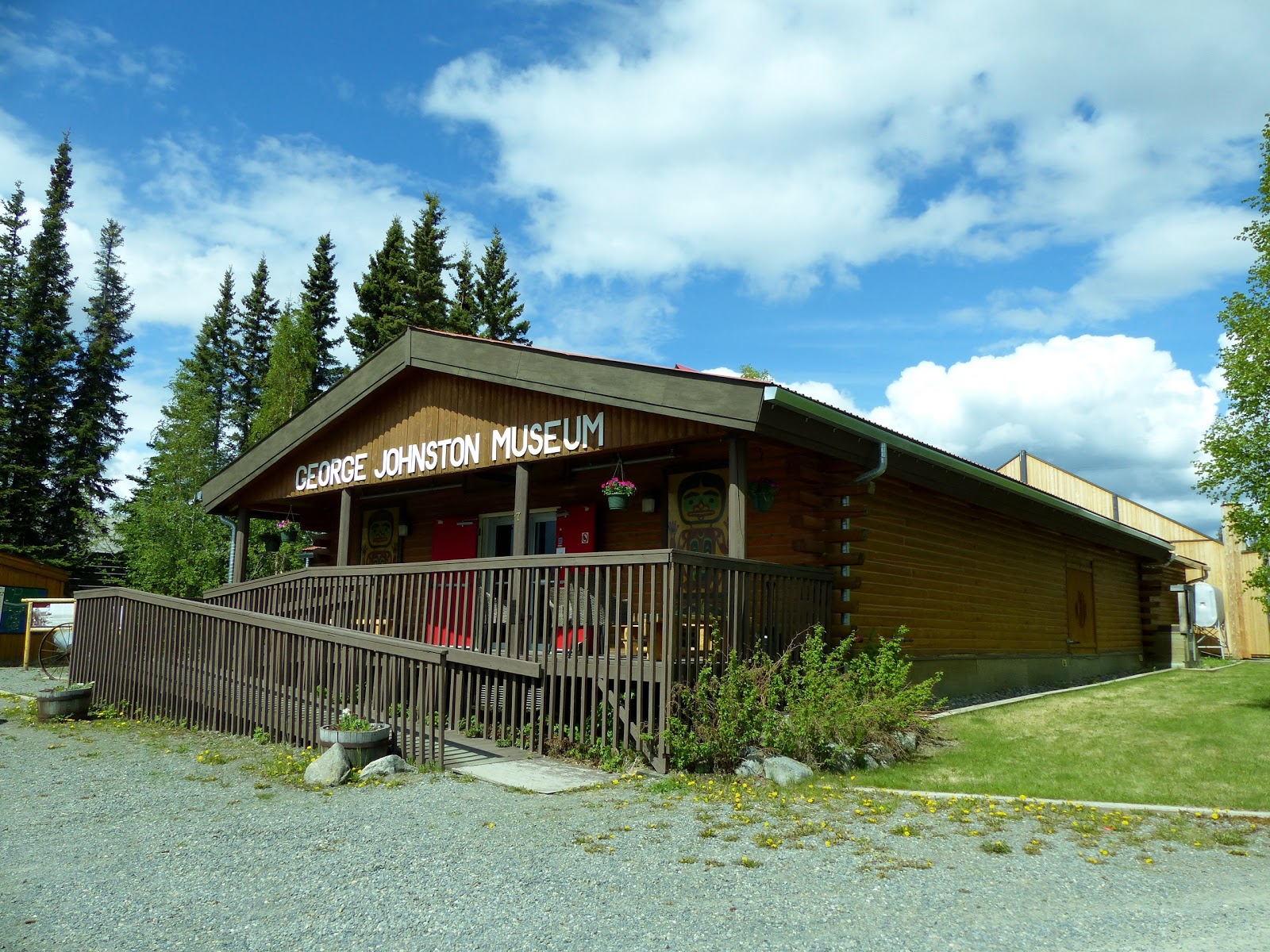
 There is a line of totem poles leading up to the
building. Sometimes I have problems with
the … on NW Indian art. I could figure
out the frog and the beaver. There are two birds--one’s an eagle, one’s bound to be a raven. The last one's just confusing.
There is a line of totem poles leading up to the
building. Sometimes I have problems with
the … on NW Indian art. I could figure
out the frog and the beaver. There are two birds--one’s an eagle, one’s bound to be a raven. The last one's just confusing.