Not coming from New Mexico, I didn't know a lot about the Santa Fe Trail. I remembered it went to Santa Fe, but I didn't know Kansas had a vested interest. I'd only learned
(or do I mean "relearned"?) in the last couple weeks that it wasn't an emigrant trail, but a commercial trade route. The Plains Indians figured that part out quicker than I did, and they made a practice of attacking the travelers and mail shipments on the Trail.
Fort Larned National Historic Site is a complete and authentic frontier army post from the Indian Wars era of the 1860s-1870s. Ir was one of a series of military posts set up for Santa Fe Trail protection and escort duty for mail stages and wagon trains. They called it "Guardian of the Santa Fe Trail." There were no walls surrounding it.
(I read why but don't remember now. If you're interested, check it out and let me know.)
The Visitor Center is in one end of one of the Infantry Barracks where we watched the video, got passport stamps and checked out the museum.
It's also one of the host sites for "Kansas Kids for Fitness Day", held on the first Friday in May.
(We didn't know that part until we got there.) There were 3rd graders everywhere! Park employees and volunteers, with the help of older kids from Larned High School, set up all sorts of games and programs for them to do. I think the adults sneaked in a bit of history while they were playing games like pull-the-cannon and build-a-teepee; they certainly didn't get much when they whirled through the buildings like tornadoes.
We did a bit of a do-si-do with them most of the day. When kids in matching t-shirts came out of a building, we'd go into it. We usually managed to stay a bit ahead or behind most of them most of the time. They were noisy and they were rowdy, but they were having a lot of fun. They made us laugh--and the best part was that none of them came home with us.
(Been there, done that!)
There are 9 original buildings restored to their original appearance. Many of the buildings have been furnished just like they would have been 150 years ago. There are living history interpreters in period costume who will answer questions and explain what it was like while the fort was in operation. First stop was the Infantry Barracks.
(I didn't realize soldiers had such nice big beds. Turns out they're made for FOUR people, two top and two bottom, head to toe. I think I'd opt for Officer candidate school.)
The other half of the building is the Post Hospital. I'm guessing that since there's only one pillow they don't have to share beds here.
This is an interesting stretcher, but I don't quite get the hood. As windy as it is in southwestern Kansas, I'd think that if you put it up to protect the poor soldier from the rain, the wind would catch it and he'd go flying like Mary Poppins.
The Shops Building included the bakery and blacksmith shops. The smithy was busy making something to hand out to the kids before they left.
There is one reconstructed building at the fort. The original Blockhouse was dismantled in 1900, but they rebuilt it with historical accuracy.
The Commissary is set up with authentic supplies. They're probably empty boxes, but it's fun to check out what they had in stores. Some of this stuff looks like governmental excess spending, but maybe it's just governmental surplus.
(Or is that the same thing?)
The Quartermaster Storehouse had everything needed for frontier military operations, including clothing and bedding for the soldiers. They had a Clothing Allowance List posted, which was pretty interesting. They were allotted 7 Caps in a 5-year period--and 11 Flannel Drawers--which I assume is underwear.
(And whoever said the Army doesn't have their priorities straight!)
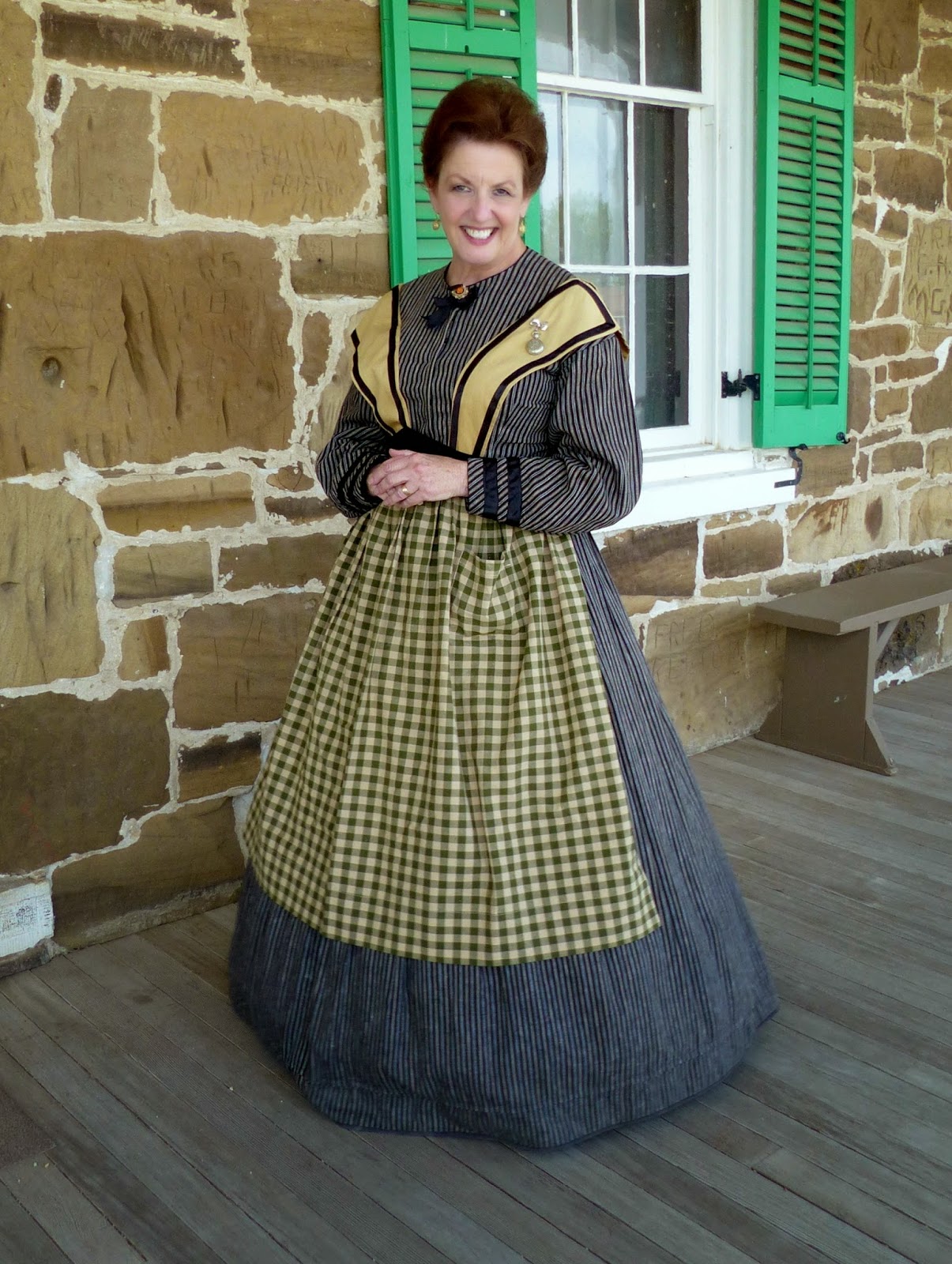
Then it was on to the Officer's Quarters--the Commandant's wife was there to great us.
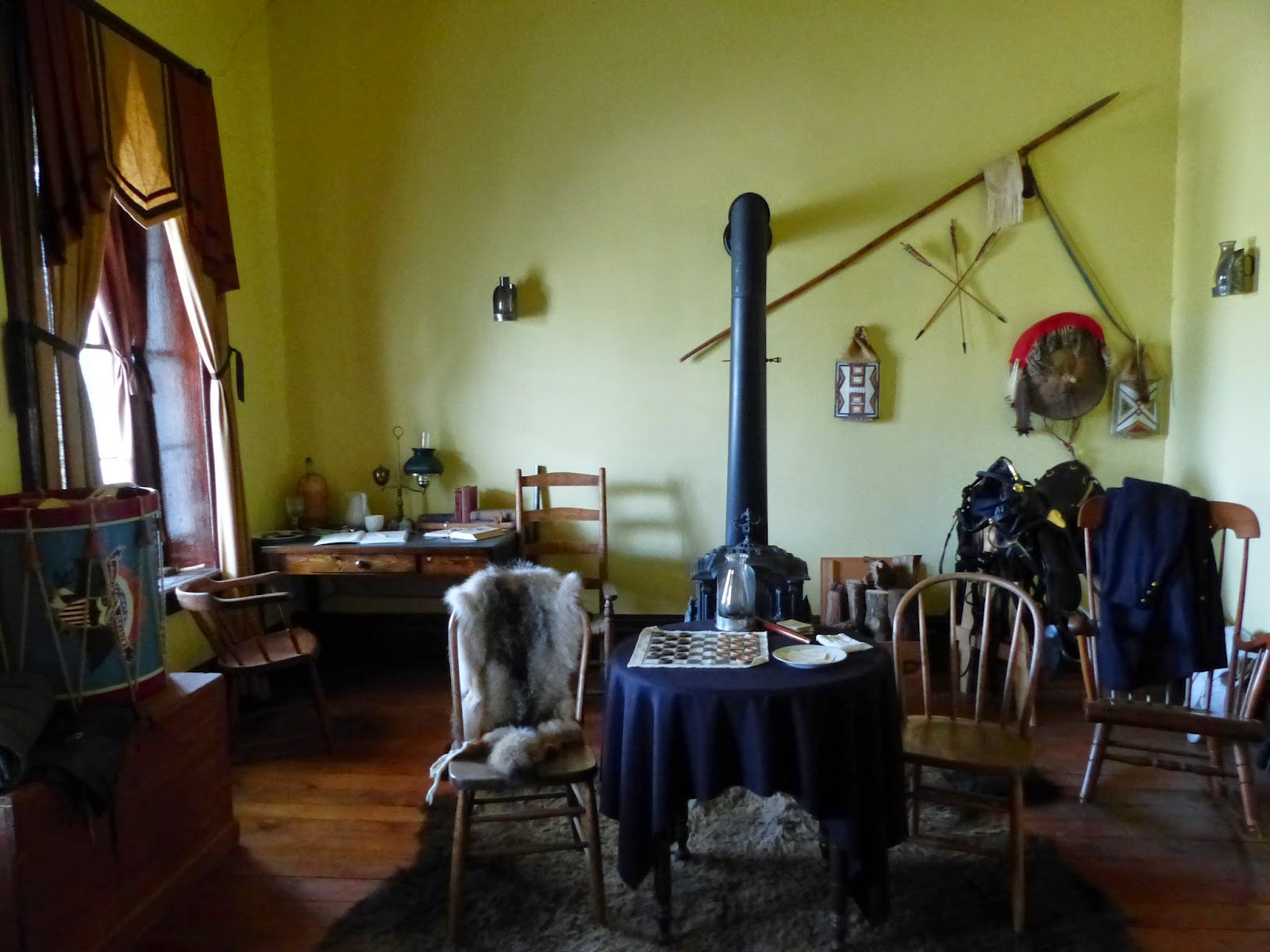
If you were a lieutenant, you got one room--even if you had to share it with a wife and a child. More rank = more rooms.

Many of the sandstone blocks used to build the fort have names and dates carved into them. Since the soldiers could get into big trouble defacing government property, there aren't many from that period. But lots of visitors to the area while it was a ranch left their marks. People must have been crawling all over the place because almost every chunk of rock front, sides and back of the buildings belongs to someone.

While we were in the neighborhood, we drove a few miles down the road to the
Santa Fe Trail Center. I expected it to be a history of the Santa Fe Trail. Mostly it wasn't. Mostly it was a history of the area with a bit about the Trail in the corner. Nice place if you're into antiques.
I did like the sod house they've built out back (and one really cool windmill!). It would have been bad enough living in a house with a dirt floor--but to have the walls and roof made of dirt blocks too? Ugh!


.JPG)
.JPG)

.JPG)
.JPG)

.JPG)

.JPG)
.JPG)
.JPG)
.JPG)
.JPG)
 Many of the sandstone blocks used to build the fort have names and dates carved into them. Since the soldiers could get into big trouble defacing government property, there aren't many from that period. But lots of visitors to the area while it was a ranch left their marks. People must have been crawling all over the place because almost every chunk of rock front, sides and back of the buildings belongs to someone.
 While we were in the neighborhood, we drove a few miles down the road to the Santa Fe Trail Center. I expected it to be a history of the Santa Fe Trail. Mostly it wasn't. Mostly it was a history of the area with a bit about the Trail in the corner. Nice place if you're into antiques.




.JPG)

.JPG)
.JPG)
.JPG)
.JPG)
